What to Know Before Building in the Kootenays
 Legacy Build
March 16, 2026
Legacy Build
March 16, 2026
Building a custom home is one of the biggest decisions most people make in their lifetime. In the West Kootenays, it comes with a specific set of realities – steep terrain, a unique permit environment, seasonal weather constraints, and a regional trades market that operates very differently from larger urban centres.
This guide walks you through what the process actually looks like, from first conversation to handing over the keys. No jargon, no sales pitch – just an honest look at what’s involved so you can go in with clear expectations.
Step 1: Pre-Construction Planning
Before a single piece of lumber is ordered, good builders spend significant time in the planning phase. This is where most of the real work happens – and where mistakes get caught before they cost money.
Pre-construction typically includes:
- Site assessment – soil conditions, slope, sun orientation, access, drainage
- Design development – working with your architect or designer to finalize floor plans
- Budget development – getting real numbers, not ballpark guesses
- Permit applications – submitted to City of Castlegar, RDCK, or relevant authority
- Timeline planning – scheduling trades around Kootenay weather windows
In the Kootenays, permit timelines can vary significantly depending on whether your property falls within city limits or RDCK jurisdiction. It’s worth asking your builder exactly who you’re dealing with before you assume a timeline.
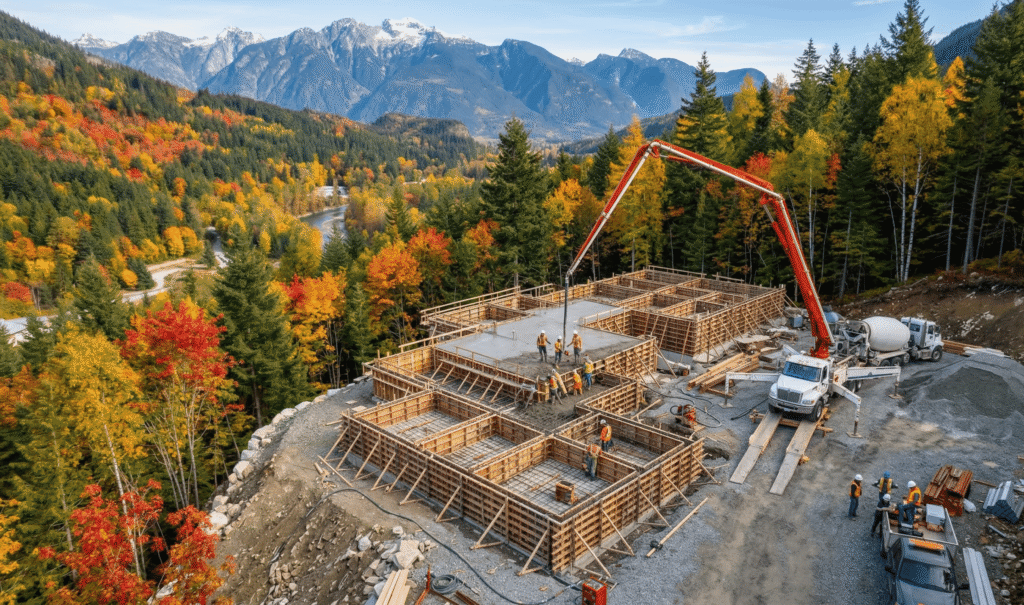
Step 2: Site Preparation and Foundation
Once permits are in hand, site prep begins. In the Kootenays, this phase deserves extra attention. Rocky terrain, high water tables in some areas, and significant frost depth requirements all affect foundation choices.
Common foundation types for this region include full basements, crawl spaces, and slab-on-grade – each with trade-offs in cost, livability, and suitability for your specific lot. A builder with genuine local experience will know which foundation works for your soil conditions and what the RDCK or city inspector will expect.
Source: BC Building Code
Step 3: Framing – The Bones of Your Home
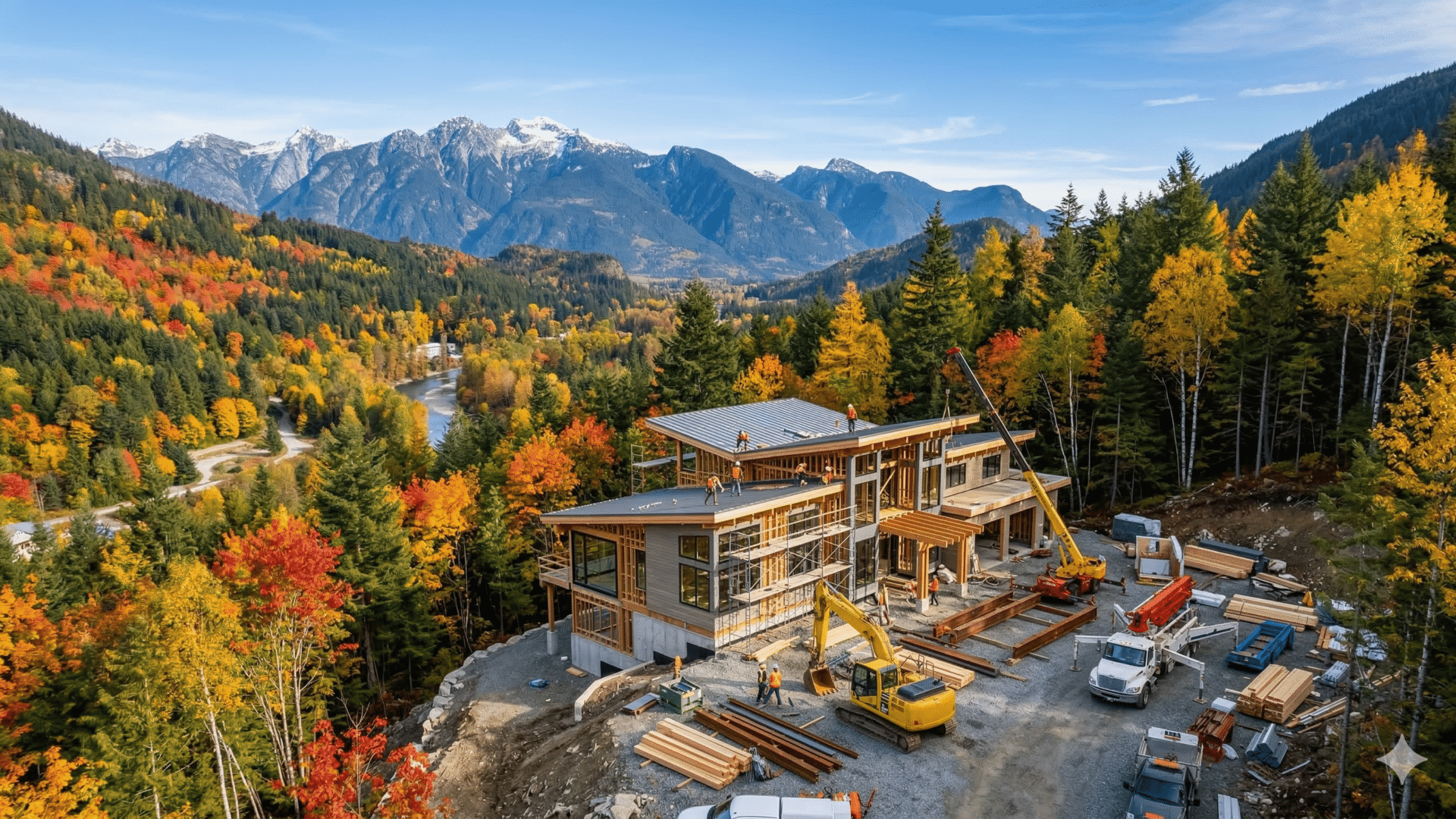
Framing is when a build starts to feel real. Walls go up, floor systems are installed, and the shape of your home becomes visible for the first time. In the Kootenays, framing must account for local snow loads – roofs are engineered to handle heavy accumulation, and this affects both pitch and structural requirements.
A quality frame sets the stage for everything that follows: insulation, mechanicals, drywall, and finishes. Shortcuts taken here create problems that are expensive to fix later.
Step 4: Building Envelope – Windows, Doors, and Siding
The building envelope is everything that separates inside from outside: exterior walls, roofing, windows, and doors. Getting this right matters enormously in the Kootenays, where you’re managing cold winters, heavy snowfall, and summer wildfire exposure.
Key envelope decisions include:
- Window specifications – triple-pane vs double-pane, thermal performance ratings
- Siding material – durability in freeze-thaw cycles, fire resistance ratings
- Air sealing and vapour barrier – critical for energy efficiency and moisture control
- Roof system – material choice, pitch, overhang design for snow shedding
Step 5: Mechanicals, Insulation, and Drywall
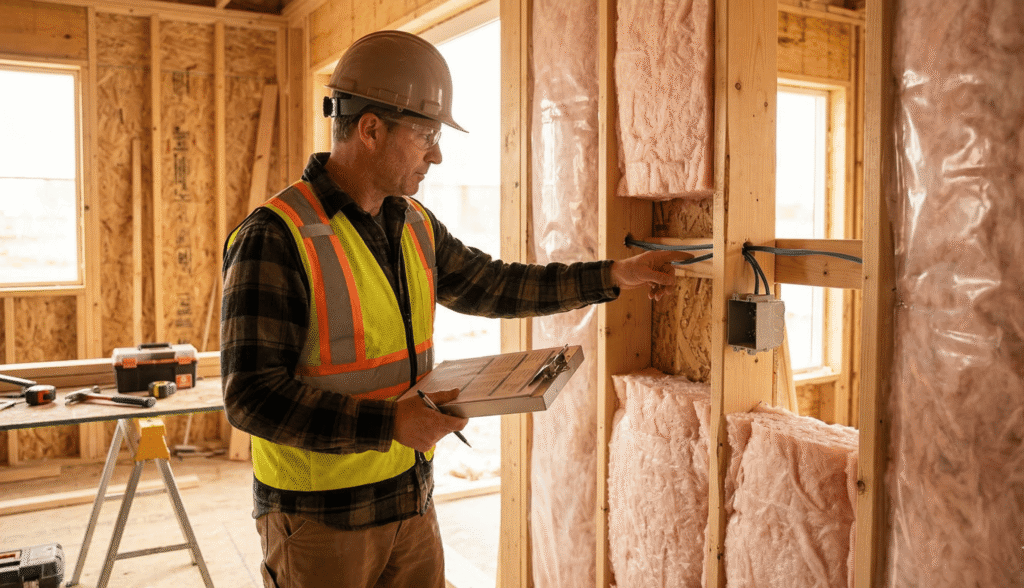
After framing and envelope, trades move in: plumbers, electricians, and HVAC installers rough in their systems before insulation and drywall close everything up. Inspections happen at multiple stages here – no wall gets closed until the inspector signs off.
Insulation choices in the Kootenays often lean toward higher R-values than the minimum code requires, simply because the climate demands it. A builder who understands local energy costs will help you make decisions that pay off over time.
Step 6: Finishes – Where Your Vision Comes to Life
This is the phase most people visualise when they imagine their custom home: flooring, cabinetry, tile, fixtures, paint. It’s also the phase where schedules can slip if materials are back-ordered or trades aren’t sequenced properly.
A good builder manages finish sequencing carefully – flooring goes in after paint, fixtures go in after tile, millwork after flooring. Getting this order wrong creates damage and re-work.
What Does It All Cost – and How Long Does It Take?
These are the two questions every homeowner asks first. Here’s a realistic range for the West Kootenays in 2025–2026:
- Custom home construction: roughly $350 per square foot on the low end, rising to $600+ for higher-complexity builds and premium finishes
- Timeline: 12-20 months from permit approval to occupancy for a typical custom build
- Pre-construction and permitting: 2-6 months before construction begins
These numbers vary based on lot conditions, design complexity, material choices, and market conditions. The most important thing a builder can give you is an accurate, itemised estimate – not a rough ballpark that shifts later.
Source: BC Assessment
Frequently Asked Questions
How do I find a reputable custom home builder in Castlegar or Nelson?
Start by asking for references from recent local projects, and verify that the builder carries WorkSafeBC coverage and appropriate liability insurance. A builder with genuine local experience will be able to walk you through local permit requirements, typical timelines, and regional material costs without hesitation.
How much does it cost to build a custom home in the West Kootenays?
Custom home construction in the Kootenays generally starts around $350 per square foot and can climb to $600+ depending on design complexity, site conditions, and finish level. Budget separately for land, permit fees, site prep, and landscaping, as these can add 15-25% to your total project cost.
How long does it take to get a building permit in Castlegar or the RDCK?
Permit timelines vary. Within City of Castlegar limits, straightforward residential permits often process within 4–8 weeks. RDCK rural permits may take longer depending on the complexity of your project and current application volumes. Your builder should be able to give you a realistic estimate based on current conditions.
Do I need an architect to build a custom home?
In BC, homes over a certain complexity threshold require engineer-stamped drawings. For most custom residential builds, a qualified residential designer and structural engineer can handle what’s needed – a full architectural firm isn’t always required. Your builder should guide you through what’s legally required for your specific project.
What’s the biggest mistake first-time custom home builders make?
Underestimating pre-construction costs and timelines. Many people budget only for construction, not for design, permits, site prep, or the time those phases take. Starting with a realistic, itemised budget – not a rough per-square-foot estimate – saves a lot of stress later.