Can You Build a House Through a Kootenay Winter?
 Legacy Build
September 15, 2026
Snow is coming, and you are wondering whether your new home has to wait until spring. It is a fair question in the Kootenays, where winter brings cold snaps, heavy snow, and short days for several months of the year. The short answer is that building a house in winter is possible, but not every stage handles the cold equally well.
This post explains which stages of a build slow down or need extra protection in winter, which ones carry on without much trouble, how a winter start can affect cost and schedule, and how to work back from a spring ground-breaking so your planning starts at the right time. If you are thinking about building next year, the answer to “when should I start?” is probably sooner than you expect.
Can construction keep going through winter?
Yes. Winter construction in BC is common, and crews in the Kootenays build through cold months every year. Higher towns like Rossland see a longer snow season, so timing matters even more there. What changes is how the work is done, how fast it goes, and what it takes to protect materials and finished work from freezing.
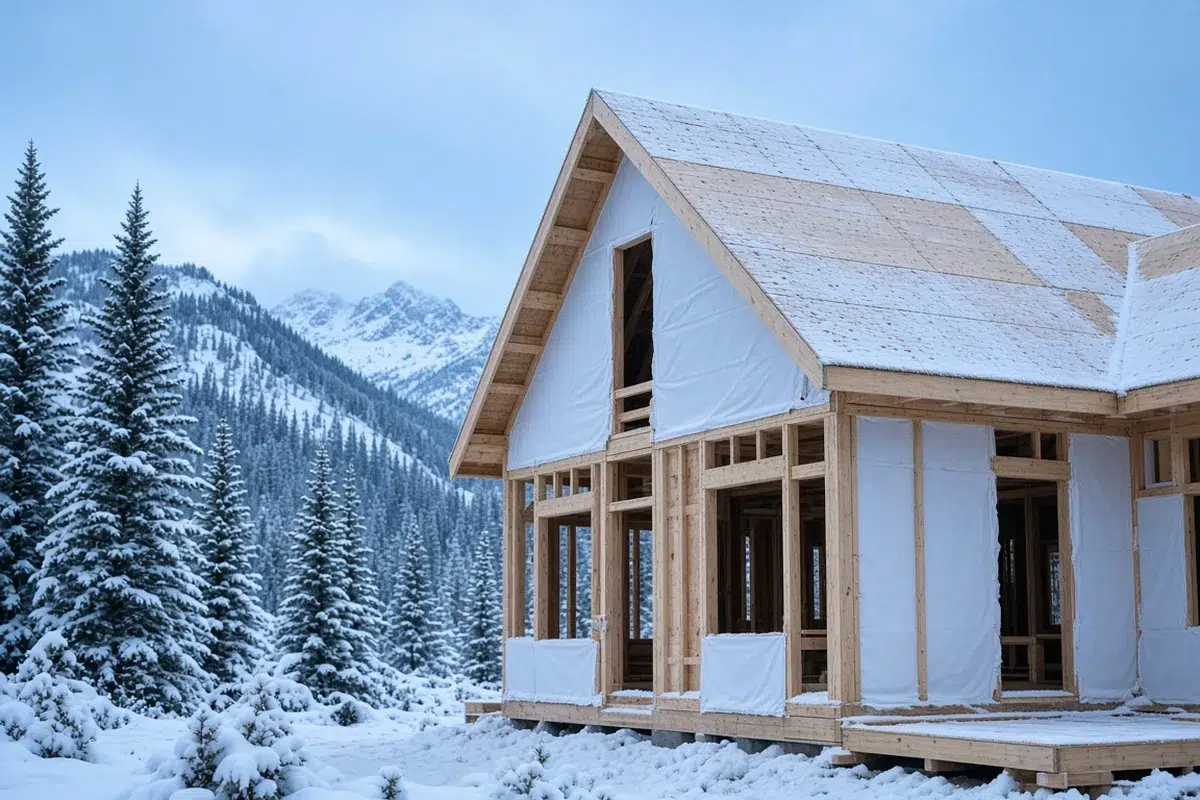
The biggest dividing line is whether the house is closed in. Before that point, much of the work happens outdoors and depends on the ground, the weather, and the concrete. After it, most work moves inside where it can be heated and protected. That is why timing matters so much when building a house in winter. A build that reaches the closed-in stage before the hard cold sets in can keep moving through winter. A build that is still at the excavation or foundation stage in January faces more obstacles.
Which stages of building a house in winter are hardest?
The hardest stages are the ones that happen in and on the ground: excavation, footings, foundation walls, and slabs. These stages depend on soil and concrete, and both behave differently when temperatures drop.
How is concrete poured in freezing weather?
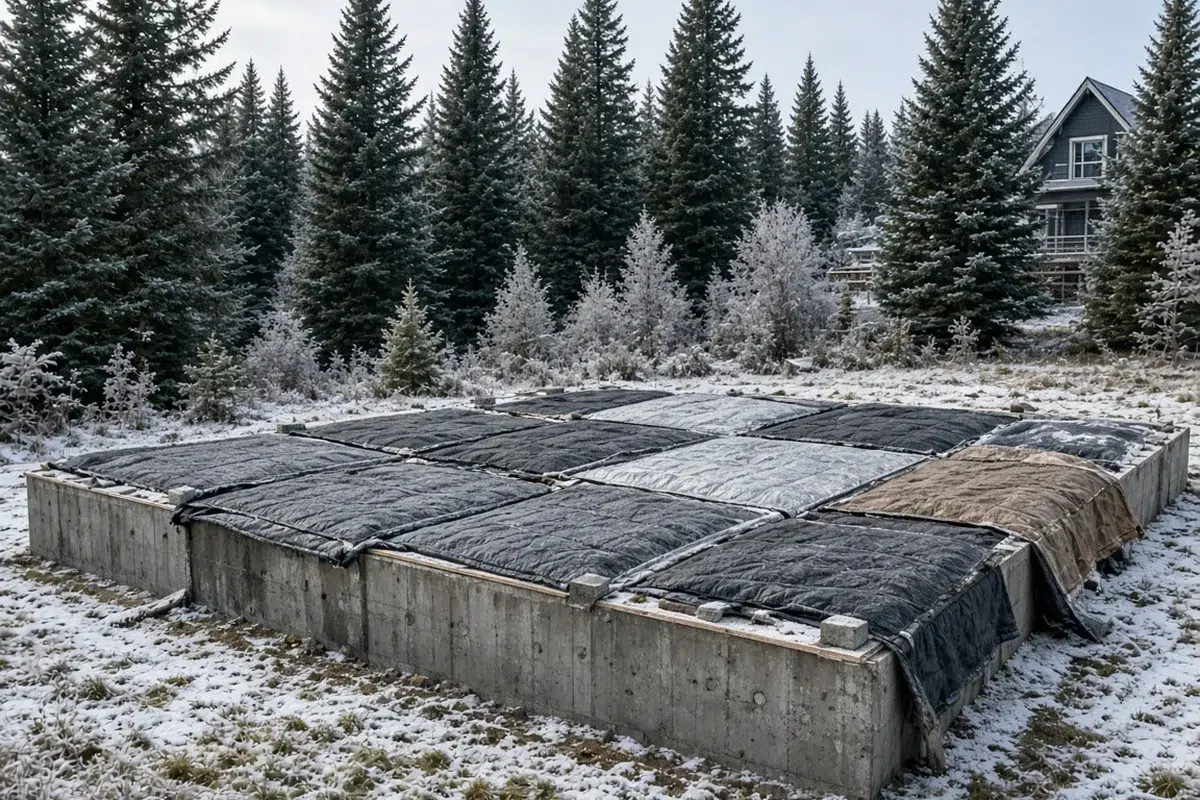
Concrete needs to stay above freezing while it cures. If fresh concrete freezes, it can lose strength and become damaged, which is a problem you cannot fix later. Canadian concrete practice treats air temperatures at or below 5°C as cold-weather conditions that call for protection.
Pouring concrete in cold weather is possible with the right steps:
- Heated enclosures around the forms to keep the air warm during the pour and curing
- Insulated blankets over fresh concrete to hold in heat
- Heated water or accelerators in the mix to help the concrete gain strength faster
- Protection through curing, so fresh concrete never freezes in its first days
- No pouring on frozen ground, since footings and slabs need a thawed, stable base
Each of these adds time, equipment, and labour. The work can be done well in winter, but it takes more planning than a summer pour.
What about excavation and frozen ground?
Frozen ground is harder to dig. Once frost goes deep, excavation slows down and wears harder on equipment. Backfill and fill material also cannot be compacted properly when frozen, and poorly compacted fill can settle later under slabs, driveways, and walkways. Where possible, builders aim to finish excavation and backfill before freeze-up, or cover the dig area with insulated blankets to keep frost out of the ground.
Access is the other challenge. Snow, ice, and freeze-thaw cycles can make rural roads and steep driveways difficult for excavators, concrete trucks, and delivery vehicles. If your lot is on a hillside, read our post on building on a sloped lot in the Kootenays, which covers access for equipment on steep sites.
Which stages are fine in winter?
Once the house is framed, roofed, sheathed, and the windows are in, it is considered closed in (some builders call it lock-up). From there, much of the remaining work can carry on through winter with temporary heat.
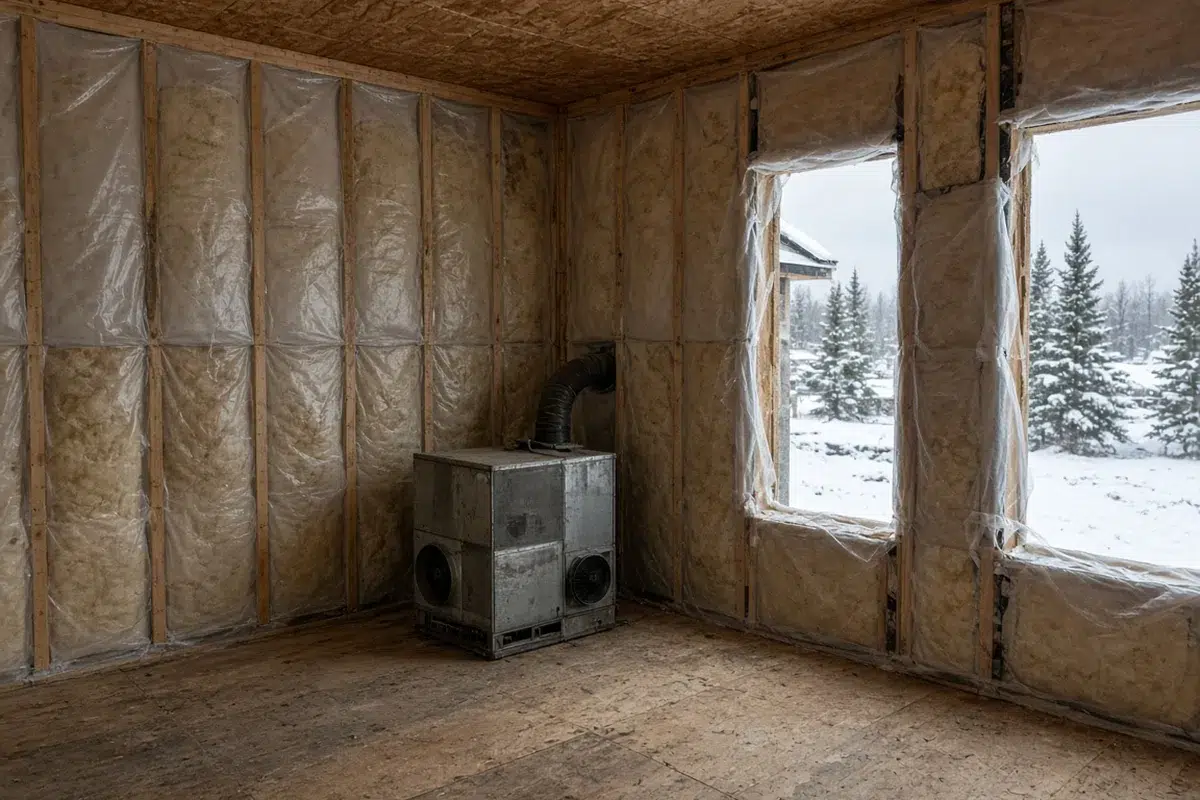
Mechanical rough-in for plumbing, electrical, and heating happens inside the shell. Insulation goes in indoors, protected from snow and rain. Drywall can be hung and finished with temporary heat keeping temperature and humidity steady, and interior finishing such as trim, cabinets, flooring, and paint is all indoor work.
Framing itself can continue in winter too, though snow on the deck and short daylight slow it down. Crews spend time clearing snow before they can work, and materials need to be kept dry. Exterior finishing such as siding and some roofing details may also wait for milder days. For a fall start, the usual goal is to get the roof on and the windows in before deep winter, because that turns the rest of the build into indoor work.
Does a winter start change cost or schedule?
Usually, yes. Winter adds real costs that a summer build does not carry. Concrete, curing, and the closed-in interior all need heating. Hoarding, the temporary enclosures that protect work areas from cold and wind, has to be built and moved as the work progresses. Snow has to be cleared from the site, the driveway, and the building itself, and short daylight means fewer productive hours for outdoor work.
Snow load is a factor too. A heavy Kootenay snowfall can pile weight onto roofs and floor decks before they are finished, so crews clear it promptly. Materials stored on site need to be covered and kept off the ground.
Winter is not all downside, though. It is an excellent time for the parts of a build that happen at a desk. Using the winter months for design, planning, and permits means you are ready to break ground in spring instead of starting the paperwork then. Trades may also have more availability in the slower season for interior work. To see how these factors shape your budget, our custom home cost calculator gives you a planning number for your project.
When should you start planning for a spring start?
For many families, the best time to start building is a spring or early summer ground-breaking, which gives the outdoor stages the full building season. The catch is that a spring start needs its planning done well before spring. Working back from that date makes the timeline clear.
Here is roughly how the lead time adds up, using the stages in how we run each stage of a build:
- Initial consultation takes about one to two weeks.
- Design and planning takes about four to eight weeks and includes design, material selection, engineering and permit preparation.
- Fixed-price contract takes about one to two weeks.
- Permit lead time comes on top. The RDCK recommends applying at least three months ahead of your construction start. Our post on how building permits work in Castlegar and the RDCK covers the details.
Add those together and a spring ground-breaking means starting the conversation in the fall or early winter. That timing also lets you make decisions without rushing. For a fuller picture of the build itself, read what to expect when building a custom home in Castlegar.
Frequently Asked Questions
Is it cheaper to build a house in winter?
Usually not, since winter adds heating, hoarding, snow clearing, and slower outdoor work. Some owners do benefit from trade availability during the slower season. The best value often comes from planning through winter and breaking ground in spring, so the outdoor work happens in better conditions.
Can you pour a foundation in winter in BC?
Yes, with the right protection. Crews use heated enclosures, insulated blankets, and heated water or accelerators in the mix, and they never pour on frozen ground. Fresh concrete must not freeze while it cures. It costs more and takes more planning than a summer pour.
How long does it take to build a house in the Kootenays?
It depends on size, design, site and permits. Design, budgeting, and permits all come before construction starts, so starting your planning early helps you break ground when you want to. A build that starts in spring also has the best chance of being closed in before the next winter.
What does closed in mean in house construction?
A house is closed in when it is framed, roofed, sheathed, and the windows are installed, so the interior is protected from the weather. Some builders call this lock-up. After that point, interior trades can keep working through winter with temporary heat.
Ready to Plan a Spring Start?
Building a house in winter is possible, but the smoothest builds use winter for planning and save the ground work for spring. If you want to break ground next spring, now is the time to start. At Legacy Built Homes, Justin Creaser and our team can work through your design, permits, and fixed-price contract over the coming months, so your custom home build is ready to start when the ground thaws.
The next step is a phone call. Call 250-558-9531 to book your free consultation with Justin, and have a look at our step-by-step custom home process before you talk.